
3D scanning

What is 3D scanning
3D scanning is the process of acquiring digital data about a physical object using laser scanners, photogrammetry, or other technologies. This process is used to create an accurate digital copy of an object, which can then be used for various purposes, such as research or the production of replicas. 3D scanning is often used in industries such as architecture, industry or healthcare.
There are many technologies for 3D scanning, including laser scanners, structured light, kinetic sensors and photogrammetry. Each of these technologies has its own advantages and limitations, so it is important to consider your specific needs and goals in order to select the most appropriate technology for the project. For example, laser scanners are suitable for accurate measurements but may be limited when scanning large or complicated objects. Structured light, on the other hand, allows large areas to be scanned quickly but may be less accurate than laser scanners.
We use different types of 3D scanners, all of which are completely touchless and safe for scanned objects, animals and people.
Our main Focus
- Scan film sets and shooting environments for use in matchmoving or scene enhancement
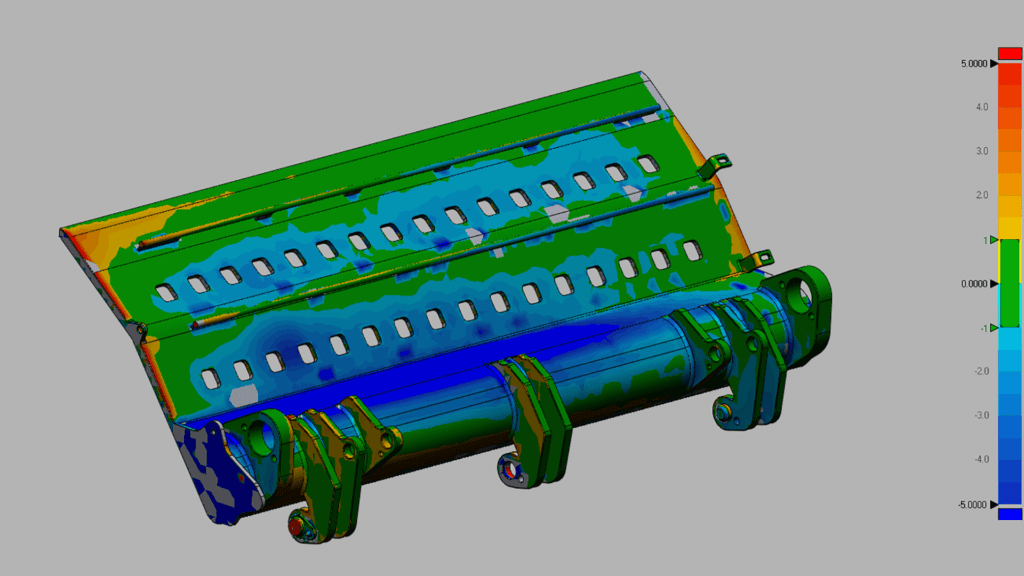
- Verification of accuracy and quality control of parts down to hundredths of a millimetre and comparison with the 3D CAD model including preparation of a measurement report
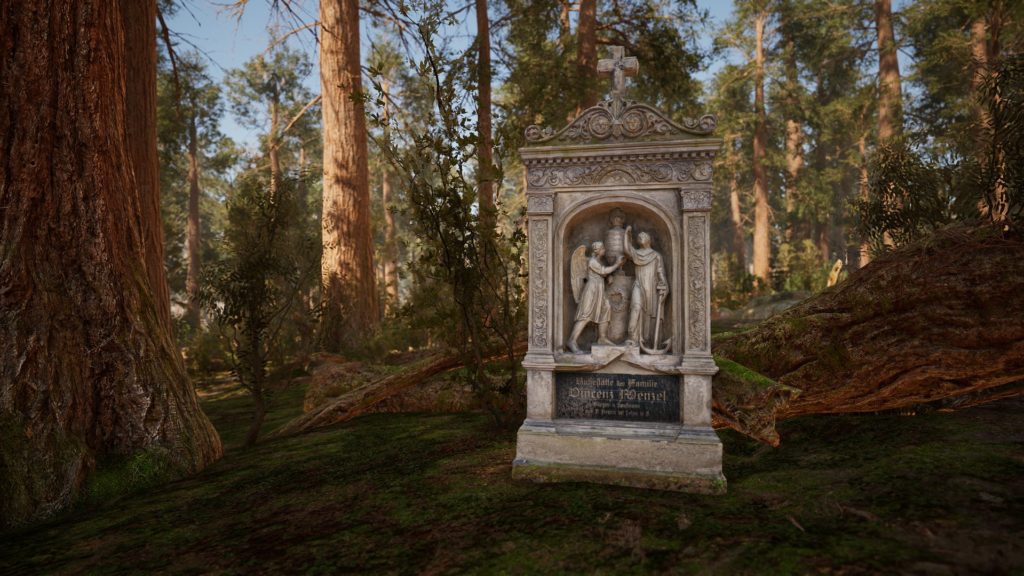
- Digitization of cultural heritage, monuments, important buildings, sculptures, works of art of all sizes - from coins to entire building complexes
- Documentation, digitisation and archiving of museum exhibits, archaeological sites and palaeontological artefacts
- Documentation of reconstruction and restoration works (comparison of the state before and after, or even during the works)
- Accurate surveying of the actual condition and comparison with plans in CAD format, or creation of CAD documentation for objects for which documentation is missing
- Scanning of industrial buildings and facilities
- Scanning objects for use in advertising and marketing
- Possibility to scan people or animals in one of the largest 3D scanners in continental Europe (151 sensors)
- Model preparation for 3D printing / CNC milling, rapid prototyping
Types of scans
Scanning for visual
- film industry
- advertising
- development of computer games
- digitisation of cultural heritage
- architectural visualizations
- product visualisation
Technical scans
- industrial halls
- production lines
- Buildings
- Land
- buildings to be reconstructed
- products and semi-finished products
- automotive
Data processing
- registration of scans
- pointcloud
- mesh
- creation of documentation
- quality control
- reverse engineering
- data preparation for 3D printing

Technology
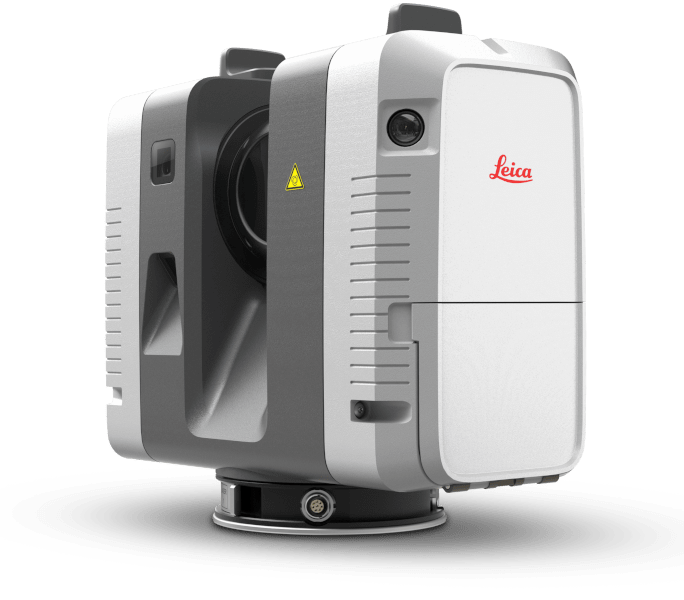
- laser scanners
- Leica RTC 360
- Faro Focus X330
- ZEISS T-SCAN Hawk
- Konica Minolta Vivid 910
- photogrammetry
- Sony A7R
For whom we scan
- 3D animation
- Architecture and Construction
- Automotive industry
- Film, advertising, VFX
- Cultural heritage
- Aeronautics and Astronautics
- Museums
- Industrial design
- Marketing
- Engineering
- Forensics
- Structural Engineering
- Art and Sculpture
- Virtual Reality (VR)
- Development of computer games
- Research and development
- Education
- Healthcare
Where we scan

Our location in Prague makes us very flexible. Of course we can scan anywhere in the country, but we are by no means limited to scanning within the Czech Republic. Depending on the current workload, we are able to respond to your requests throughout Europe within a few days. Our 3D scanning kit is fully mobile and we are technically able to provide scanning anywhere in the world, however, outside the EU various legal restrictions may apply such as the need for a work visa etc.


What is difficult to scan
It's good to know where the limits of 3D scanning lie today. We are able to solve most problems ourselves during the scanning process or in the post-processing of the scans, but we would still like to inform you what conditions will give you the best results.
- In general, the best results can be achieved when scanning complex shapes with irregular, non-repeating patterns. If the scanned object is smooth, monochromatic and glossy, obtaining accurate results can be difficult
- Optically difficult materials, especially transparent and glossy objects, are almost impossible to scan without using a special matting spray or without applying a special adhesive tape
- Scanning overlapping or very closely spaced objects can lead to holes in the resulting data
- Thin, delicate elements are very difficult to scan.
- Hair, feathers, or other very thin parts of the scanned object can cause problems
- Deep holes - e.g. a vase can be scanned from the outside without problems, but the inner wall will be generated by software during post-processing
- Moving objects (i.e. mainly people or animals) can only be scanned in a scanning studio with many fixed sensors that scan the object in synchronisation at the same time. Moving objects cannot be scanned using the laser method
- Vegetation and unwanted moving objects in the vicinity of the scanned object (typically people, cars, birds, etc.) can cause problems for two main reasons: they can obscure the scanned object, and moving objects look different on each scan, resulting in inaccuracies when stacking individual scans together. For these reasons, it is ideal if the area around the object being scanned is closed to the public and clear of vegetation
Price
Unfortunately, it is not possible to set a flat price for 3D scanning, because it is strongly dependent on what is the subject of the scan, what accuracy and resolution the scans should be in, what scanning technology is used, etc. It can therefore range from a few thousand for smaller objects scanned by photogrammetry to hundreds of thousands for large buildings scanned by a combination of multiple technologies. The price is therefore determined individually for each job based on your request. To get a quote, please contact us by email, phone or via the contact form.