
Developing immersive VR applications and games in Unreal Engine 5
The future is knocking on the door. Are you ready? Virtual reality is experiencing a huge boom as users seek new, fascinating experiences. Bridge the gap between reality and the virtual world, have a VR application created for you and improve your business results!
We push the boundaries of reality. We are a Czech studio specializing in virtual reality (VR), augmented reality (AR) and interactive 3D experiences. We combine precise 3D scanning with programming in Unreal Engine 5 to achieve maximum visual realism and functionality.

What we do (main services)
Custom VR/AR Application Development We create interactive applications for education, industry, marketing and entertainment. We specialize in Unreal Engine 5, which allows us to deliver cinematic quality graphics in real time. We develop primarily for the Meta Quest 3 and PC-VR platforms.
Game Development & Interactivity We are not just graphic designers, we are developers. We program logic, physics and game mechanics (Blueprints / C++). From simple visualizations to complex multiplayer game systems.
3D Scanning & Photogrammetry (Asset Creation) Our roots are in the digitization of reality. For your VR projects, we scan real objects, people or entire environments and convert them into optimized 3D models (Game-ready assets). Thanks to this, your VR application looks like reality.
Why have a VR app created?
Unique experiences
We will create an immersive 360-degree user experience that will amaze your customers and give you a competitive advantage.
Marketing potential
Not everyone has a VR app! Shine in front of your customers before your competition overtakes you!
You will save money
Developing an app costs money, but once it's ready, it can be used over and over again without any additional costs. In the long run, you'll not only get your money back, but you'll even save money!
What can we develop for you?
Industrial simulations and training (VR Training): A safe environment for crisis training, machine operation or health and safety training. Save costs on real operations and eliminate risks.
Virtual Tours and Architecture: Let clients walk through a building that isn't even there yet. With UE5, we achieve photorealism that's indistinguishable from visualizations, but is fully interactive.
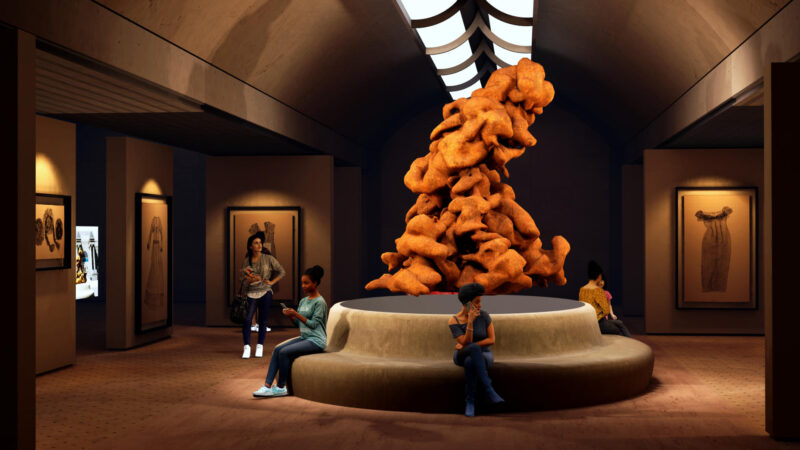
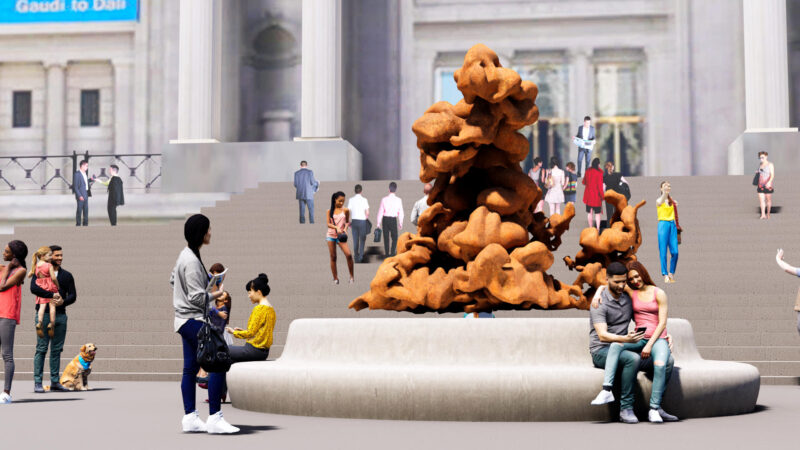
Digitalization of cultural heritage (Virtual Museums): Thanks to our experience with 3D scanning, we transfer sculptures, artifacts and entire castles into virtual reality, where visitors can view them up close and without barriers.
Gaming projects and marketing activations: Fun applications for trade fairs, showrooms or full-fledged game titles.
Development cycle
First contact
You contact us with your ideas about what the application we develop should be able to do and how it should look. Together, we will clarify, without obligation, what is possible, how much time it will take, and we will tell you a preliminary approximate price for the development.
Specification of the assignment, determination of requirements
The specification phase is the first stage of VR game or app development, where the goals and requirements for the project are defined. This step is very important because it establishes a basic idea of what the game will do and what features it will have. This phase also establishes the technical parameters and scope of the project to ensure that the game or app can be created within the given constraints.
Planning and preparation
In this phase, a detailed analysis of the project's requirements and goals is performed and various solution options are proposed. The result is a preliminary design of a VR application or game.
Implementation and development
During the implementation and development phase, the VR app or game begins to truly evolve. Developers implement individual features and game mechanics and test their functionality.
Testing and improvement
In this phase, the VR app or game is tested and potential bugs and flaws are investigated. These flaws are then fixed and the VR app or game is improved until it is of sufficient quality and reliability.
Release
Once testing and optimization are complete, the game or app is prepared for release. This means creating an installation package or uploading it to a VR app distribution platform to make it available to users. At this stage, a marketing campaign may also be prepared or sales of the game or app may begin.
Futher development and maintenance
Of course, development doesn't end with launch. We will continue to develop and maintain your game or app for you, adding new features and keeping it compatible with the latest technologies. At this stage, it is also important to create and provide support for users so that they can use the game or app without any problems.
Reference
NeuroBoostVR
NeuroBoostVR is a gamified interactive application designed for people with Parkinson's disease. Players complete various tasks that help them practice fine motor skills, balance, and spatial orientation.
The game was developed for Meta Quest standalone headsets.
The app is now available for purchase on Meta AppLab.
Client: Game Therapy a.s.
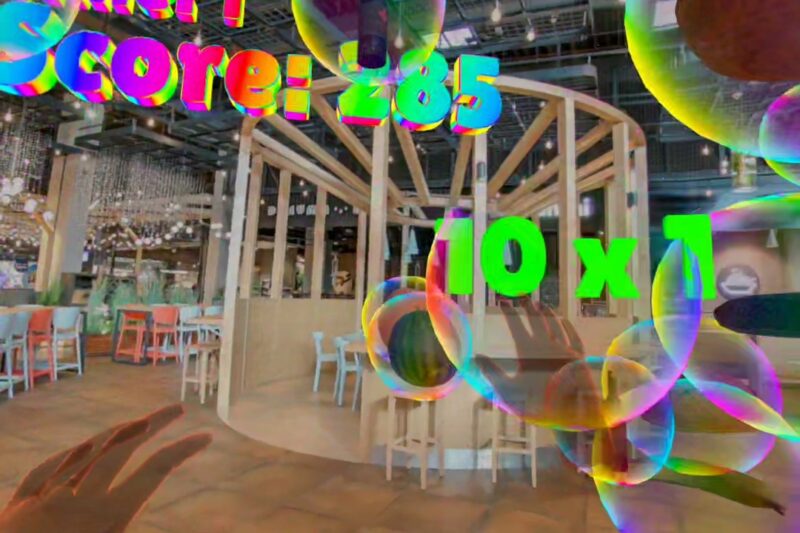
Bubbles
On the occasion of the opening of the reconstructed Varyáda shopping centre in Karlovy Vary, we developed a marketing game called Bubbles.
The player's task here was to burst bubbles using his hands. The bubbles contained various goods (fruit, pastries, candy, alcohol, cigarettes).
The player was given a score based on the healthiness of the item - the most points were given for healthy foods, while points were deducted for severely unhealthy ones such as alcohol or cigarettes. The game thus also had a certain educational character. We also added combo bonuses or time slowdowns to make it more fun.
Client: EPG Global Property Invest
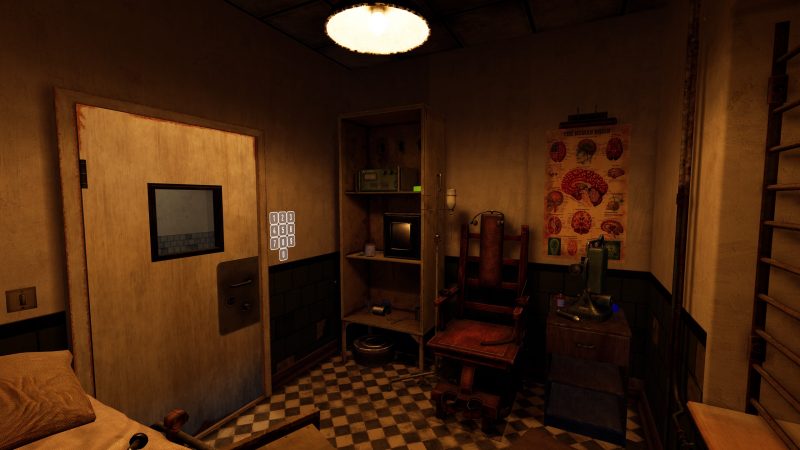
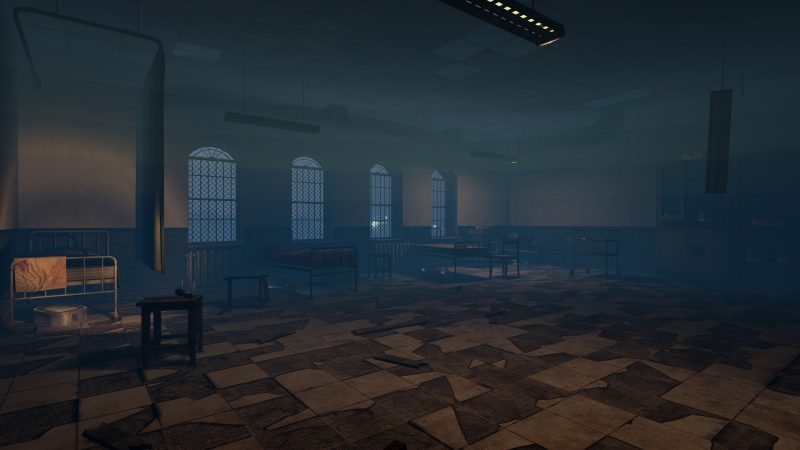
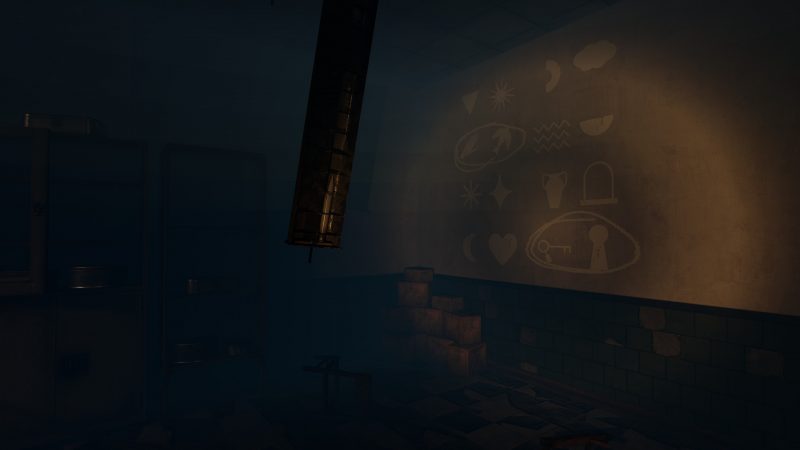
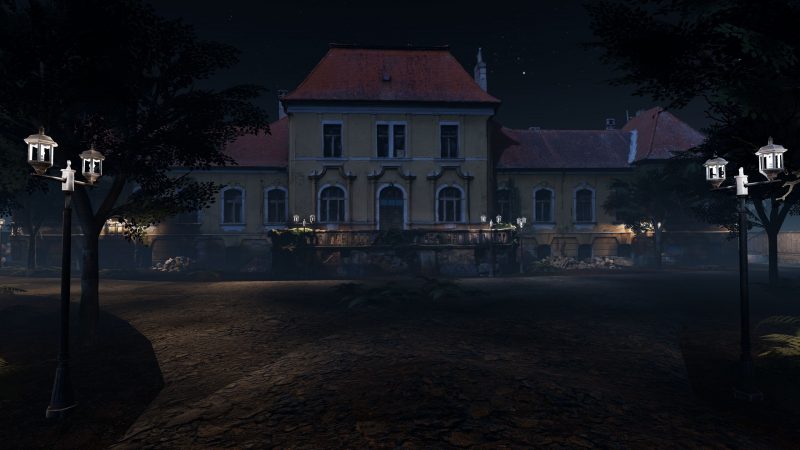
ClaustrOFF
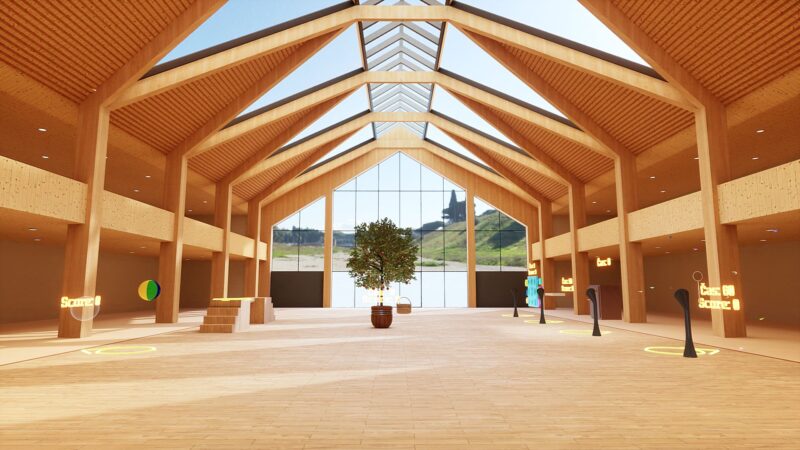
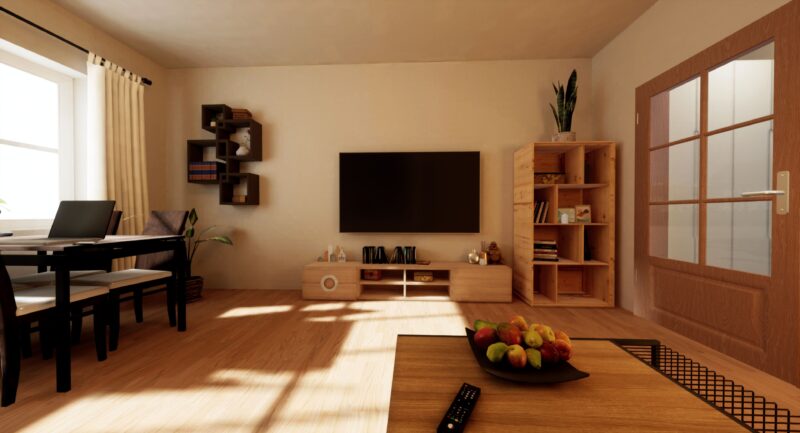
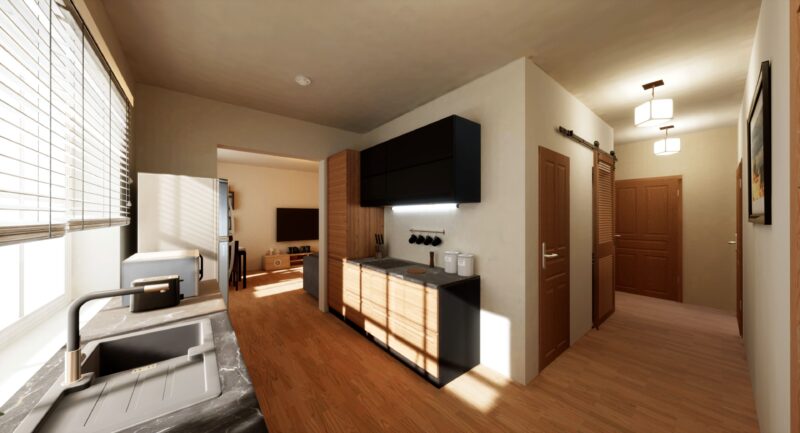
ClaustrOFF is a VR application, or rather a game, that we developed, whose task is to help people with claustrophobia overcome their fear of enclosed spaces.
It is essentially an escape game where the player progresses through various rooms that are getting smaller and smaller. In each room, they have to solve several tasks to get further. It is this puzzle solving that is supposed to help them with their fear by forcing them to focus on something other than their fear.
The game runs on Oculus Quest 2 and PC VR.
Client: PROUNION a.s.
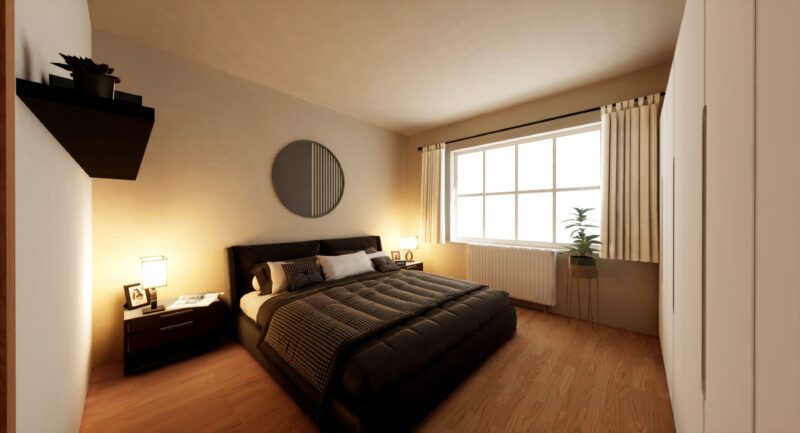
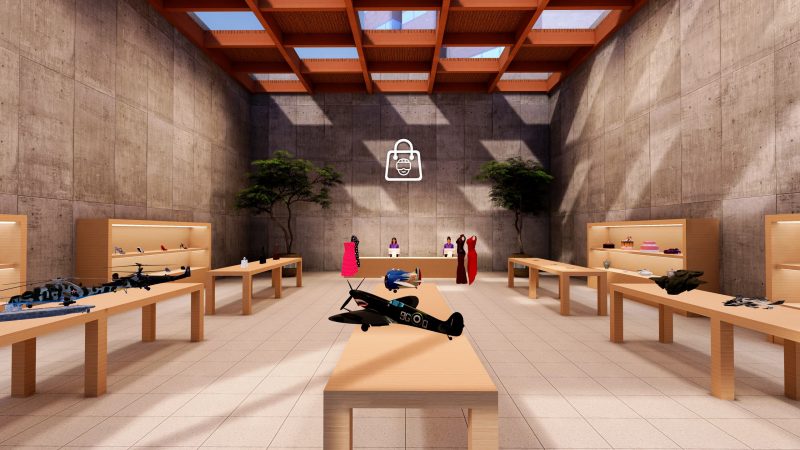
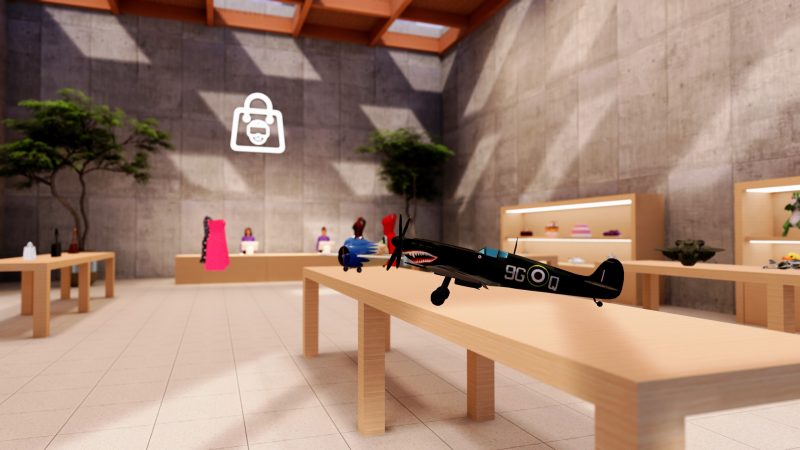
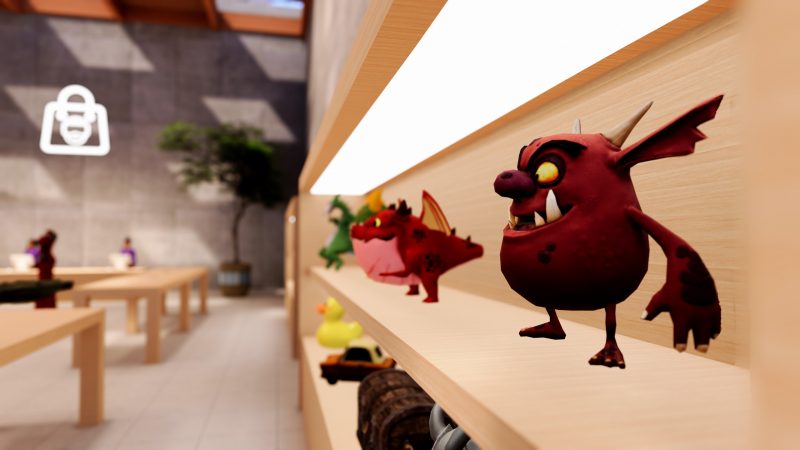
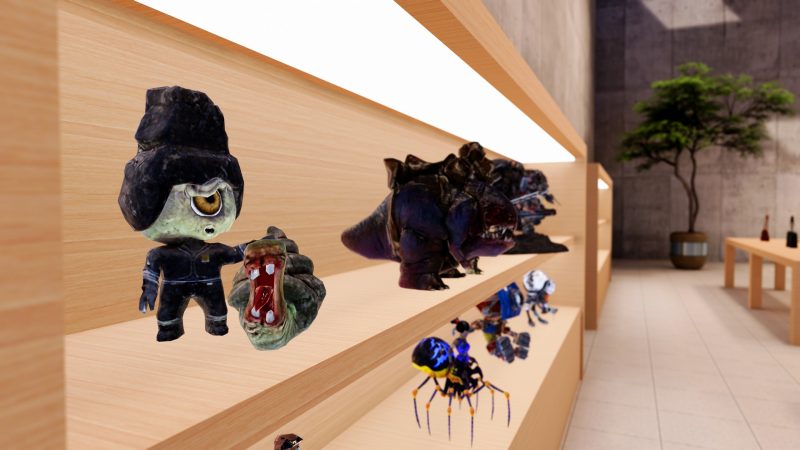
VR Eshop
Client: Virtual Reason s.r.o.
VirtuBee
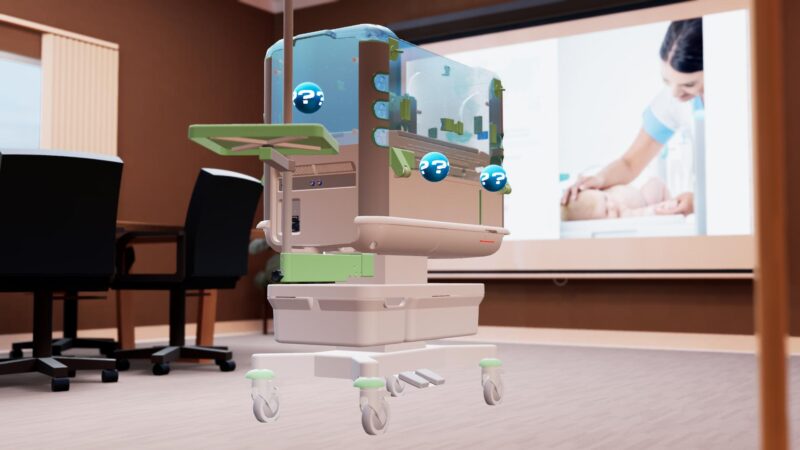
VirtuBee is a revolutionary application developed by us for presenting products in virtual reality. It allows users to view products from different angles and even virtually cut them open to see what's inside and how they work. With VirtuBee, you can experience products in a new and unique dimension and get to know their functions and construction up close.
VirtuBee is an easy-to-use and intuitive application that is suitable for anyone interested in products and how they work. Whether you are a professional designer, engineer or just a curious person, VirtuBee will allow you to gain new insights and discover new information about the products that interest you.
If you want to learn more about VirtuBee and its capabilities, visit the project's website at virtubee.vr3d.cz
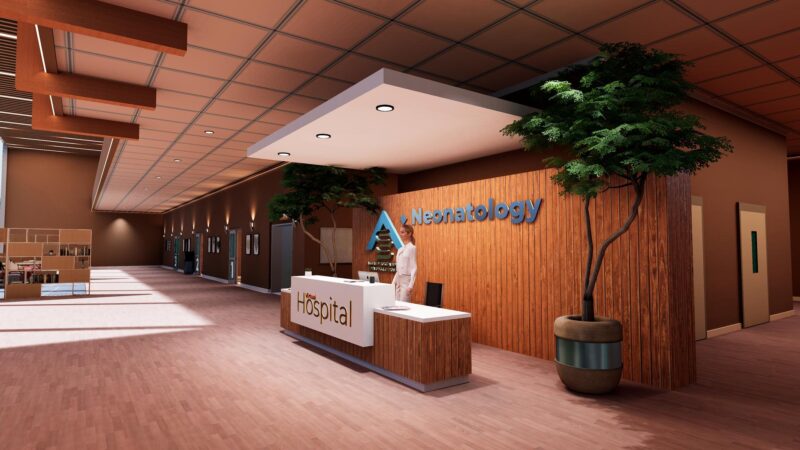
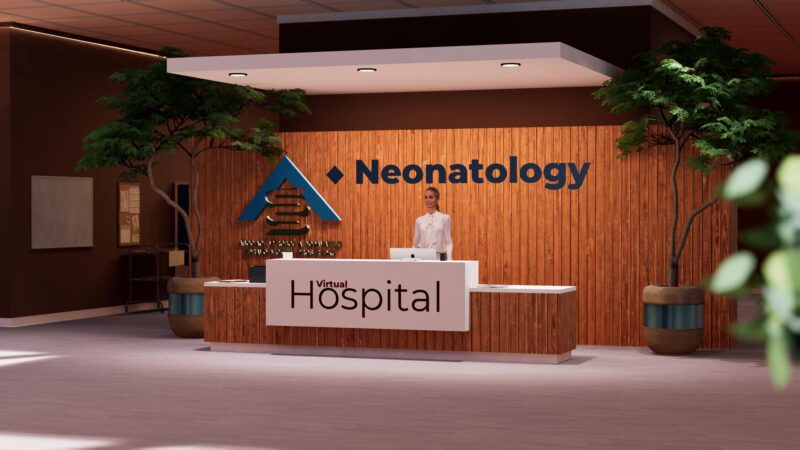
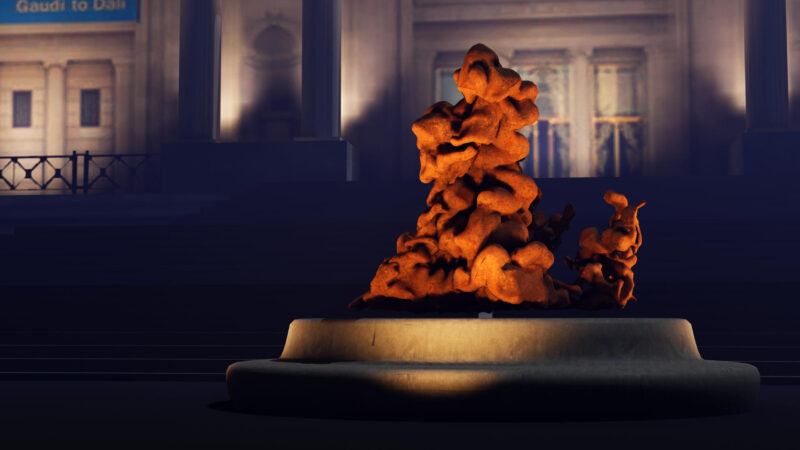
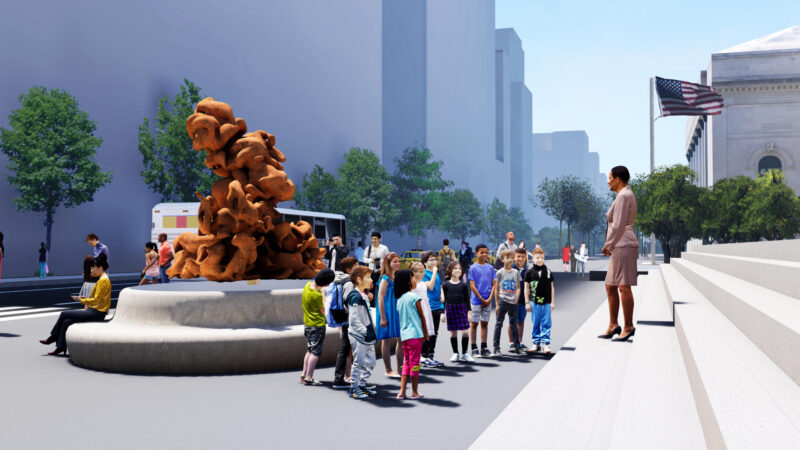
Weathering
Client: Karen la Monte
We use technology





FAQ - frequently asked questions
Virtual reality (VR) is a technology that allows users to experience the feeling of being part of a virtual world. VR is used in various fields such as gaming, education, architecture and design, medicine, and advertising.
VR allows users to enter environments that would otherwise be inaccessible and experience different experiences or simulate different situations. VR is usually used through special glasses or headsets that transmit images from a computer or other device to the user's eyes.
Virtual reality is an ever-evolving technology that offers many possibilities and brings new ways to convey experiences and simulate various situations.
- Education: Improve learning capabilities and student engagement. For example, students can explore distant places or historical events without leaving the classroom.
- Training and education: simulation of various situations for training, such as flying an aircraft or rescue operations.
- Medicine: medical education and training, but also the diagnosis and treatment of patients, for example treating phobias or providing analgesia to treat pain.
- Architecture and design: reviewing and testing building and interior designs before they are built or renovated.
- Entertainment and Arts: creating experiences such as concerts or art exhibitions in a virtual environment.
- Business and conferences: organizing business meetings or conferences without the participants having to travel.
- Marketing and advertising: improving brand awareness and presenting products and services to customers in a new and interesting form.
- Real estate agencies: viewing properties for sale or rent of apartments and houses without the need for a physical visit.
- Tourism: exploring travel destinations and creating virtual tours of places that would otherwise be inaccessible or too far away for tourists.
- Retail: the sale of products and services over the internet in the form of a virtual store.
- Automotive industry: design and visualization of new cars before they are manufactured, testing the ergonomics of controls and infotainment.
- Film and Television: creating interactive and immersive film and television experiences.
- Games: creating games that are interactive and immersive, giving players the feeling of being in the game itself.
- Architecture and urbanism: the design and planning of urban space and to test different scenarios of urban development.
- Agriculture: planning and optimization of agricultural land and simulation of various scenarios.
- Psychology and therapy: treating mental disorders and improving mental health, for example through virtual reality therapy.
- Science and research: research on various topics, such as social interaction or animal behavior in artificial environments.
- Industry: simulation and improvement of industrial processes, such as manufacturing or logistics. It can also be used to improve employee safety and efficiency.
- Rehabilitation: the treatment of injuries and post-traumatic conditions using exercises in a virtual environment. It can also be used to strengthen muscles and restore movement abilities after injuries or surgeries.
- Sports: training athletes and improving their performance. It can also be used to simulate various sporting situations for analysis and improvement of tactics or technique.
- Product demo: presenting products and services to customers and allowing them to view products before purchasing without the need for physical in-person contact or travel to a store. It can also be used to show products from different angles or demonstrate product features in an interactive manner.
- Psychology and sociology: the study of human behavior and social interactions in artificial environments.
- Geography: the viewing and study of geographical areas and landscapes without having to travel to those places.
- Law: trial simulations and training for lawyers and judges.
- Management: simulation of various business situations and training of managers and executives. It can also be used for project planning and management and data analysis.
Generally speaking, you will need a VR headset or glasses to insert your mobile phone into.
VR is most commonly used through headsets that are worn on the head and transmit images from a computer or other device directly to the user's eyes. Headsets vary by brand and type, but most include screens that provide images, headphones that transmit sound, and additional sensors that track the user's head and body movements.
In addition to the headset, you often also need a computer or other device to run the VR app or game. Most headsets require a computer with a powerful enough graphics card and other components to handle VR content and ensure a smooth and seamless experience.
Nowadays, however, there are also fully autonomous headsets, such as the very popular Oculus (Meta) Quest. These headsets do not require a connection to a computer, however, their performance is also noticeably lower and certain technical limitations resulting from their hardware and software equipment must be taken into account.
In addition to the headset and computer, other components may also be needed, such as controllers or sensors to track the movement of the user's hands and body, or a special pad for safely moving around in the virtual environment.
Generally, the cheapest option is to use a mobile phone inserted into VR glasses such as Google Cardboard, however, this solution has several fairly significant disadvantages, which is why we cannot recommend this platform.
The first significant disadvantage of this solution is that you never know what phone the user will have and whether it will be powerful enough to run a given application or game. In addition, there may be problems with different versions of the operating system, where on some phones the given application may not work at all, may show various graphic errors, or may be unstable.
Another significant disadvantage is that most users do not have a controller to move around the virtual world or track their hand movements, so control must be limited to head movements, which is often quite limiting and not natural.
Additionally, Google has already discontinued the Cardboard project and no longer supports it, just as it is not supported by new versions of the Unreal Engine, which we use for development.
Therefore, due to our concerns, we do not recommend developing for this platform, on the contrary, we can recommend the Meta (Oculus) Quest 3 or its possible successor.
Our most popular platform is currently the Meta (Oculus) Quest 3. This headset has the major advantage of not requiring a connection to a computer and is also very affordable. However, we are generally able to create a game or application for you for any VR platform on the market.
The duration of VR game or app development can vary greatly depending on many factors, such as the scope of the project, the complexity of the solution, the number of developers, and other circumstances. In general, it can be said that the development of a VR game or app can take from a few weeks to several months or even years.
It is difficult to estimate the exact development time of a VR game or application without knowing the specific project and customer requirements. Our company will of course consult with you about the development duration and we will give you an estimate right in the initial stages of development.
The price of developing a VR game or application can vary greatly depending on many factors, such as the scope of the project, the complexity of the solution, the number of developers, or the length of development. In general, it can be said that the price of developing a VR game or application ranges from tens of thousands to millions of crowns.
It is difficult to estimate the exact price of developing a VR game or application without knowing the specific project and customer requirements. We will prepare a specific offer for you, but for a rough idea, we have prepared an article that will help you get at least an approximate idea of the price.
We develop for the entire spectrum of devices.
-
Standalone VR (Mobile): Meta Quest 2, Quest 3, Pico 4. Advantage: no cables, lower hardware price.
-
PC VR (High-end): HTC Vive Pro, Varjo, Valve Index. Advantage: maximum graphic quality and performance, suitable for showrooms and demanding simulations. We always optimize the application exactly for the hardware you plan to use.
Motion sickness in VR is caused by poor optimization (low FPS) or inappropriate movement patterns. We adhere to strict technical standards (maintaining a stable 72/90 FPS) and design movement mechanics (e.g. teleportation or room-scale movement) that are natural to the human brain. This makes the experience comfortable even for complete beginners.
Shall we go for it?
Contact us directly
(+420) 606 555 848
info@vr3d.cz